School Responder White Paper Series
Overview:
Challenges in K-12 Wellness and Safety
- Challenges in K-12 wellness and safety solutions (3 parts)
- How Technology Can Help Address These Issues (4 parts)
- Implementation Strategies (4 parts)
Challenges in K-12 Wellness and Safety
- Mental Health Support:
- Bullying and Safety:
- Stress and Anxiety:
How Technology Can Help Address These Issues
- Mental Health Support:
- Communications:
- Day to Day Student challenges
- Crisis calls (guns, knives & bombs) for eminent physical danger:
Implementation Strategies
- Professional Development for Staff:
- Student and Parent Education:
- Collaboration with Tech Providers:
- Regular Evaluation and Feedback:
Focusing on wellness and safety in K-12 education is crucial for the development of students. Here are some specific challenges related to wellness in K-12 education and how technology can help address them. Every day we speak to educators, we ask then to tell us their K-12 challenges, and
how they want to use technology. The responses are overwhelming to
increase efficiency by notifying staff quicker, and greater
effectiveness by connecting the right staff member to manage specific challenges. The far the most pressing underlying pressure, across the board for all educators is there are more student and staff challenges, without more budget for more headcount how can educators expand to stem the rapidly rising need for wellness and safety. This white paper’s content focus is leveraging technology that schools can create a supportive environment that promotes the well-being of students, helping them to thrive both academically and personally.
See further details at WellnessResponder (a 501c3 non-profit) www.WellnessResponder.com
The Missing Half of School Safety
Every school in America has a safety plan.
Those plans are essential. They prepare schools for serious events like intruders, weapons, fires, and medical emergencies. These plans are necessary and important.
But schools do not run on emergency events. Schools run on people, and people bring challenges with them every day.
Students come to school dealing with bullying, anxiety, depression, food insecurity, family problems, rumors, vandalism, and conflict. Students often know when their friends are struggling long before adults do. These are not safety plan events. They’re wellness issues. But these wellness issues are often the early warning signs of the serious incidents schools work so hard to prevent.
Most schools manage these situations through informal processes — conversations, emails, meetings, and notes. But informal systems create inconsistent responses, missed follow-ups, and gaps in communication.
Schools have systems for attendance, grades, transportation, and food service. But most schools do not have a system for managing wellness.
That is the missing half of school safety.
Safety Plans respond to events. Wellness Plans respond to people.
SchoolResponder is the Operating System for Wellness.
See further details at WellnessResponder (a 501c3 non-profit) www.WellnessResponder.com
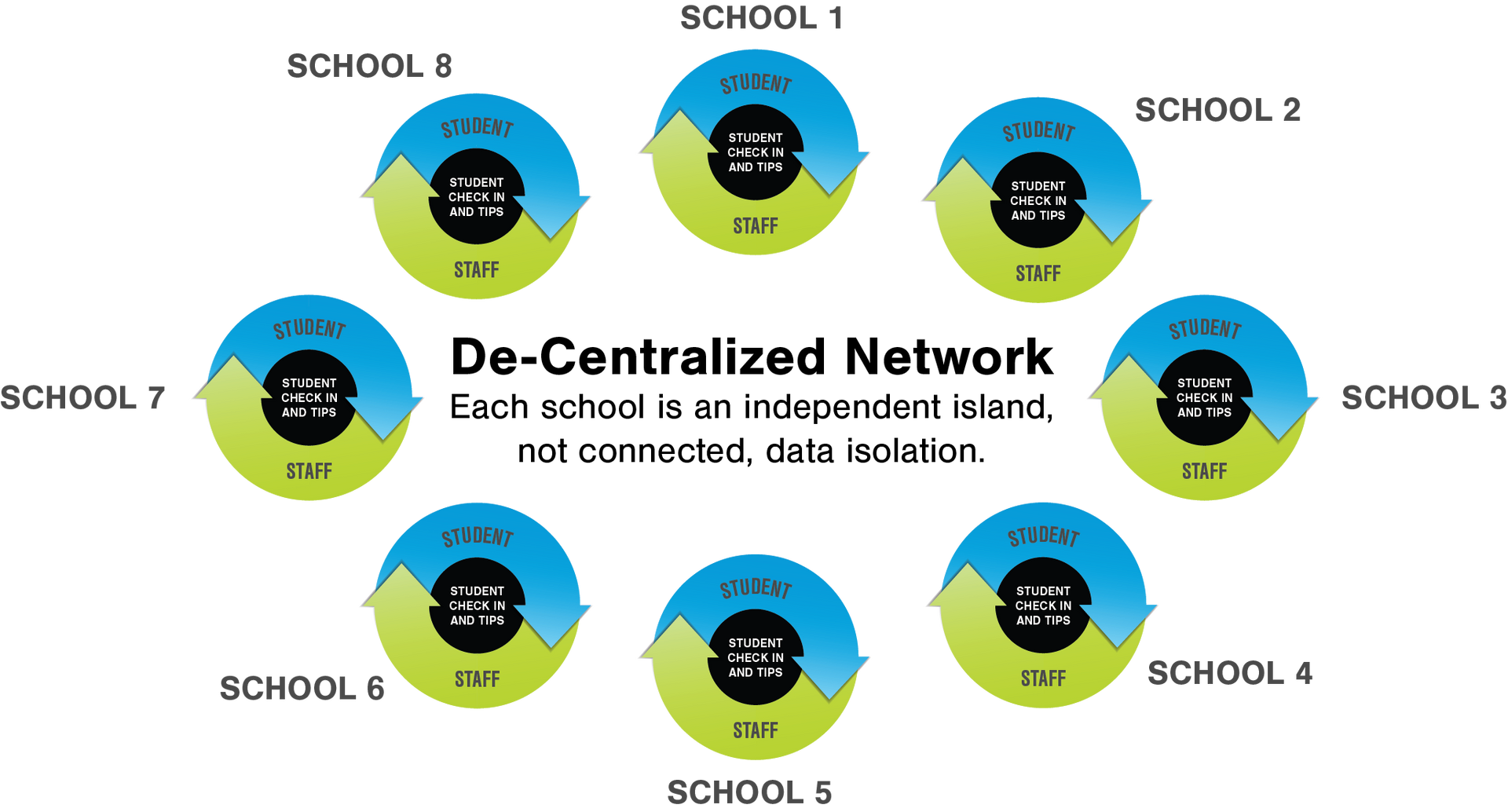
The Case for Decentralized School Communications Platform for Wellness and Safety Reporting and Auditing
Overview
To read full explanation download full document.
- The Nature of Centralized Anonymous Alerts
- The Cost of Anonymity: Misdirection and Hoaxes
- Lack of Local Knowledge in Centralized Systems
- Slower Response Times
- SchoolResponder’s Decentralized Approach
- Direct Communication with On-Site Staff
- Local Control and Agency Partnerships
- Accountability and Student Support
- Reducing False Reports, Strengthening Trust
- Faster, Smarter, Safer Schools
See further details at WellnessResponder (a 501c3 non-profit) www.WellnessResponder.com